
Get It Right the First Time.
Measuring made simple.
How To Measure for nuDoors
Measuring for nuDoors is simple and straightforward.
You don’t need special tools or experience, just a tape measure and a few minutes.
Follow the tutorial, take your time, and if you have any questions, our team is here to help.
Measuring Overview
Step 1
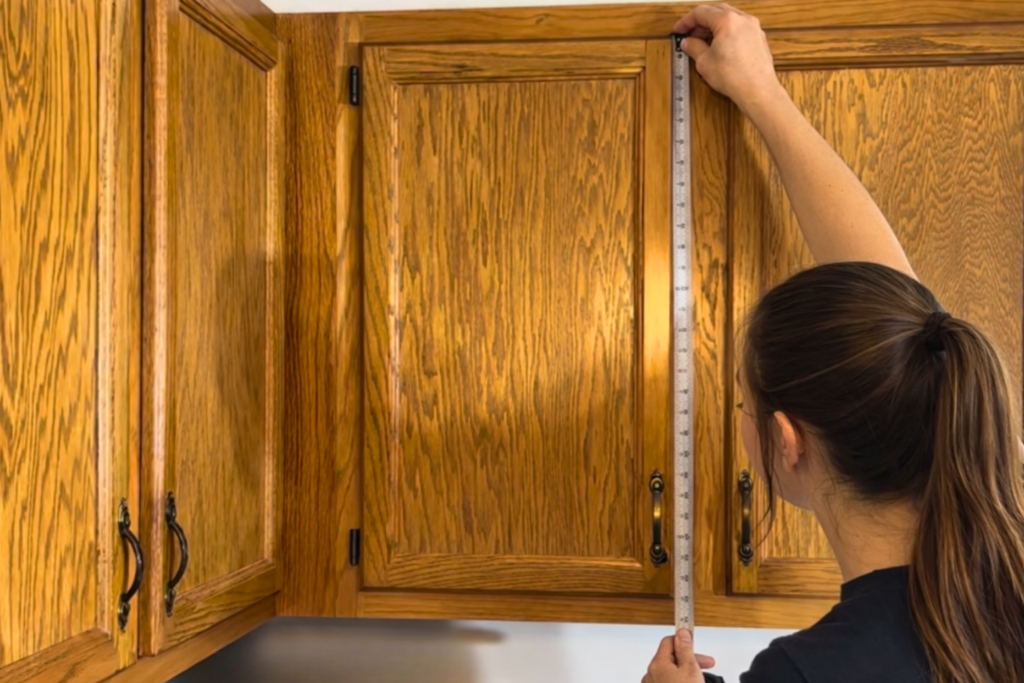
Measure The Height
Place the end of your tape measure flush with the very top edge of the door.
Pull the tape straight down to the bottom edge, keeping it tight and aligned with the door.
Use the measurement shown as the door height.
Always round your measurement to the nearest 1/16 inch.
Step 2
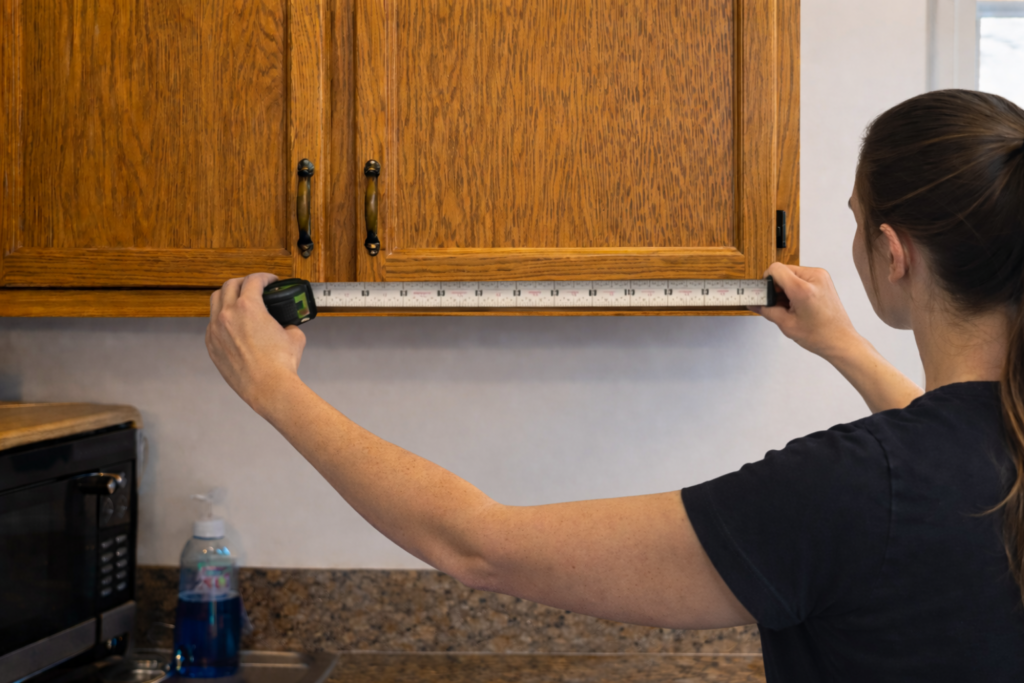
Measure The Width
Place the end of your tape measure flush with the left outside edge of the door.
Pull the tape straight across to the right outside edge, keeping it level.
Use the measurement shown as the door width.
Always round your measurement to the nearest 1/16 inch.
Commonly Asked Questions
How accurate do the measurements need to be?
Your measurements should be as accurate as possible. A tape measure with 1/16″ markings makes it easy to get the most precise height and width for your nuDoors.
Do I measure the cabinet opening or the door itself?
If there are existing doors on your cabinet boxes, it’s best to measure the door itself. Measuring the opening is possible, but measuring the door helps avoid extra calculations and ensures the most accurate fit.
What if I do not have exisiting doors on my cabinet boxes? How do I measure?
If your cabinets do not have existing doors, you can measure the cabinet opening instead.
Just keep in mind that measuring the opening requires a little extra math to determine the correct door size.
To do this, measure the height and width of the cabinet opening, then add the overlay amount x2 to both measurements.
Example:
If your cabinet opening measures 12″ wide × 28″ high and you want a 1/2″ overlay (meaning the door overlaps the cabinet box by 1/2″ on all sides), you would add 1″ to both the width and height.
Your final door size would be 13″ × 29″.
One important thing to check when measuring this way is clearance. Make sure there’s enough space between doors, and at the top and bottom of the cabinet, so the doors will fit and align the way you expect.
What if I’m measuring a row of doors (like uppers) that look like they’re all the same height, but actually aren’t?
If you’re measuring a row of cabinets (like uppers) that appear to be the same height but measure slightly differently, choose one height and use it consistently for all of them.
For example, if four upper doors measure 27 3/8″, 27 1/2″, 27 7/16″, and 27 5/8″, you can select a single height, such as 27 1/2″, and use that measurement for all four doors.
This helps keep everything aligned visually and is very common, especially in older kitchens where small variations are normal.